 Opening up social impact-focused organizations
Architect durable movements with far-reaching impacts
Download Opening up social impact-focused organizations (PDF) from our friends at The Open Organization.
In Opening Up Social Impact-Focused Organizations, authors Laura Hilliger and Heather Leson pool their years of experience in non-profit, humanitarian, and social impact-focused organizations, offering guidance for leaders working to transform their organizations with open principles in mind. With advice that's both refreshingly realistic and eminently practical, Laura and Heather explain how working openly can help advocates for social change build coalitions, create projects that respect communities' values, and architect durable movements with far-reaching impacts.
For us, the social impact space is a place in which principled, human behaviors exist alongside an abiding love of technology, a passion for social impact, and belief in the power of open source. Living by open organization principles—transparency, inclusivity, adaptability, collaboration, and community—can be difficult.
However, over the years we've brought this passion and belief to others, and we've failed at changing the hearts and minds of people in this space. We've learned some important lessons about work, the social impact space, humanity, and ourselves.
First, we've learned that this space requires a specific kind of conversation. It's a place where actions aren't concentrated on goals like "monetizing a user base" or "creating a lucrative exit strategy," but rather on missions like promoting health; achieving peace; and fostering respect for ourselves, each other, and our planet. Where technological challenges intersect with issues of social justice and ecological import, technologists and social impact-focused organizations alike are attempting to mold the future of a digital world with sustainable impacts—all in an inclusive manner respectful of people's lived experiences. This is a conversation about much more than "open code" or "open data"; indeed, it's about more than "open source." It's a conversation about the ways technologies alone won't truly make our world better—since tools, after all, always already exist in complex, pre-existing arrangements of people, power, and communities. This is a conversation about changing our everyday thinking about "work" or how people collaborate, listen, and include others. It is also about the ways people relate to and embody a their own sense of civic participation. Importantly, this is also about people and their mindsets and behaviors, so it's a conversation that's deeply contextualized.
Second, we've learned that this conversation involves specific kinds of voices. It unites "true believers" in open and agile methodologies with people who have interests and skills in everything from environmental conservation to humanitarian crises, from critical incident management to digital forensics, and motivate measurable impact on the improvement of people's lives. More and more, especially due to the global pandemic, people who haven't identified as "activists" or "change agents" are being empowered to participate in imagining, designing, and executing campaigns and activities with deep social and ecological impacts. They aren't lacking in ideas. What they need are some shared resources and coordinating principles, and someone to help them learn what those principles look like in action.
We believe open principles are those principles, and that a new generation of open advocates are the people to continue and improve upon our work. Helping to open up social impact-focused organizations is the best way for us to create sustainable change, and if you're working on that same challenge, then we're eager to help you on your way.
To be clear: this work is very difficult. It requires ample resilience, peer-support, and strength. Taking a systems-focused approach to changing the way our systems work from the inside is no task for the meek; it's a lifelong endeavor in the spirit of efficacy, justice, inclusivity, diversity, equity, and empathy. Behavioral and organizational transformation can feel like a roller coaster—something requiring ever-changing sets of skills, inexhaustible will, and robust futureproofing.
It also requires letting go of some deeply held convictions about individualism and independence. Conventional organizational discourses tell a familiar story: Climb the ladder. Allow ego and natural instincts for self-preservation to guide us. Working openly forces us to face new insights into the social and cultural norms that make transformation difficult. It's time to explore the emotional and social side of open community building and examine more closely the leadership traits management should develop.
This is our perspective on how open advocates can work within the social impact-focused space. More than a manifesto, we mean for it to be a practical guide, offering strategies and mindsets to help people and organizations flourish by learning to modify people's practices in light of cultural (and subcultural) nuances. We'll examine some of the tools we have to support and facilitate this work. But we'll also argue for a shared set of values and principles to unite our collective efforts—to light a way forward, championing openness for greater organizational impact.
—From the introduction (by Laura Hilliger and Heather Leson)
Open Perspectives is a series of short, timely publications featuring voices from a community of experts on open organizational culture, design, and leadership as they explore what they consider the most pertinent and pressing issues facing modern organizations.
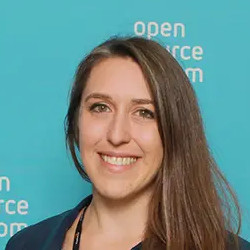
Laura Hilliger is a writer, educator and technologist. She’s a multimedia designer and developer, a technical liaison, a project manager, a conceptual architect, an open advocate who is happiest in collaborative environments. She’s a co-founder of We Are Open Co-op, an Ambassador for Open Organizations, is helping to open up Greenpeace, and a Mozilla alum. Find her on Mastodon as @epilepticrabbit.

Heather Leson works at the intersection of social impact, strategy, technology, and open principles, delivering innovative products and experiences with global networks. She has led organizational and community transformation for both Ushahidi and Humanitarian OpenStreetMap Team. She co-led construction of the International Federation of Red Cross and Red Crescent Societies (IFRC) Digital Transformation strategy and is the co-editor of the IFRC Data Playbook. As an Open Organization Ambassador, Heather has worked for many open organizations, including serving as the Board Member of both the OpenStreetMap Foundation and Humanitarian OpenStreetMap Team.